Medical Emergencies in Dental Clinics Class
Learn to prioritize patient safety and well-being in our Medical Emergencies in Dental Clinics Class, where you’ll receive expert training and practical guidance on emergency protocols.
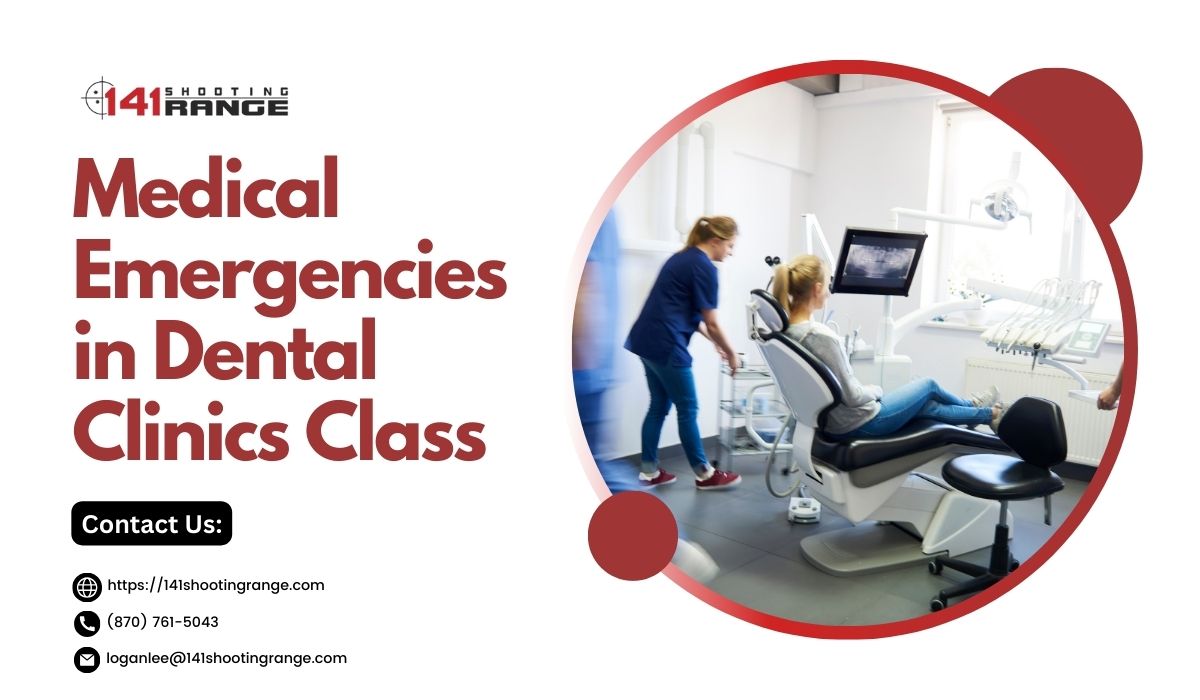
Welcome to 141 Shooting Range’s latest addition to our comprehensive training programs, the Medical Emergencies in Dental Clinics Class. This class addresses the critical topic of managing medical emergencies in dental settings for dental assistants, dentists, and dental hygienists.
Our evidence-based curriculum, featuring court-defensible, field-proven tactics that look good on camera, ensures that participants receive top-tier education in handling medical emergencies that may happen in a dental clinic (unrelated to teeth). To maintain our commitment to continuing education, this course combines theory and practice to equip dental professionals with emergency response expertise.
Join us as we elevate the standards of medical emergency training for dental clinics through our customized and performance-based training program.
Medical Emergencies in Dental Clinics Class Details
For dental medical professionals, 141 Shooting Range offers a Medical Emergencies in Dental Clinics Class. The course teaches them how to manage and respond to medical emergencies in dental clinics.
In this exclusive training, dental practitioners will learn how to handle the unique challenges and situations they may face. Their ability to react quickly and effectively during heart attacks and strokes is one of their strongest suits” with “will be emphasized and taught.
With this course, dental professionals can enhance their abilities to safeguard their patients’ health and well-being during dental procedures. Through this initiative, we aim to transform the world by imparting life-saving skills to dental professionals.
Duration:
A combination of theoretical and practical sessions makes up the course. Dental clinics can customize their training to maximize learning without interfering with their daily schedules.
On-Site Training:
On-site training allows participants to practice and refine their abilities in a controlled, supportive environment. We reinforce our commitment to excellence in emergency response training within the dental community with this on-site training method.
|
Emergency
|
Treatment Protocol
|
|---|---|
|
Allergic Reactions
|
Identify symptoms promptly.
Administer epinephrine if necessary and call for emergency help.
Monitor vital signs and provide reassurance to the patient.
|
|
Syncope (Fainting)
|
Position the patient in a supine position.
Ensure proper ventilation and provide cold compresses if needed.
Monitor vital signs and keep the patient calm during recovery.
|
|
Mild Allergic Reaction
|
Administer antihistamine orally (if the patient can swallow), observe for any progression to severe reactions, and keep the patient calm and comfortable.
|
|
Severe Allergic Reaction
|
Administer epinephrine (if available and the person is trained), call emergency services immediately, and prepare for CPR if necessary.
Monitor vital signs until help arrives.
|
|
Angina Pectoris
|
Have the patient rest and administer sublingual nitro-glycerine if prescribed.
If pain persists beyond a few minutes, call emergency services, as it may be a heart attack.
|
|
Myocardial Infarction (Heart Attack)
|
Call emergency services immediately, administer aspirin (if not contraindicated) and nitro-glycerine (if prescribed).
Monitor and be ready for CPR.
|
|
Hypoglycemia
|
Give the patient a fast-acting carbohydrate (e.g., glucose tablet, juice), monitor symptoms, and if there's no improvement, seek medical help.
|
|
Seizure (Generalized tonic-clonic)
|
Protect the patient from injury (do not restrain), remove objects that could harm, place something soft under their head, and time the seizure.
Call emergency if prolonged.
|
|
Asthma Attack
|
Assist the patient in taking their quick-relief inhaler, ensure they are in a comfortable position for breathing, and monitor closely.
Call emergency if severe.
|
|
Cerebrovascular Accident (Stroke)
|
Use the FAST protocol (Face drooping, Arm weakness, Speech difficulties, Time to call emergency services),
Call emergency services immediately and monitor the patient.
|
|
Hyperventilation
|
Encourage the patient to breathe slowly, holding each breath for a few seconds before releasing, to increase CO2 levels.
Comfort and calm the patient.
|
|
Obstructed Airways
|
Perform the Heimlich maneuver on a conscious choking adult or back blows and chest thrusts on infants.
Call emergency services if obstruction does not clear.
|
Register Now!
Become confident handling dental emergencies with our upcoming Medical Emergencies in Dental Clinics Class. For more information on how to register and when classes are next, visit our website or call us.” with “to set up a class for your dental clinic. Email, call, or text us today.
About 141 Shooting Range
141 Shooting Range offers BLS and CPR Training. More than 2,200 5-star reviews and positive reviews support its stellar reputation. Medical Emergencies in Dental Clinics Class is our newest course, reflecting our commitment to improving life-saving skills. The new addition to our institute offers comprehensive instruction in handling medical emergencies.
To achieve our vision of building a community that can make a difference in times of crisis. We aim to provide individuals with the information and skills to respond effectively to dental crises. Here at 141 Shooting Range, we aim to do more than just teach people how to shoot; we want to change the world by imparting skills that save lives.
Frequently Asked Questions:
It’s a training program for dental professionals on managing medical emergencies in dental settings.
Dental assistants, dentists, and dental hygienists who are looking to enhance their emergency response skills.
Evidence-based, court-defensible emergency management tactics that are effective and look professional on camera.
The class combines theoretical knowledge and practical exercises for a comprehensive learning experience.
It focuses on field-proven tactics and ensures emergencies are defensible and visually presentable.
The training will equip you with skills to manage real-life medical emergencies in dental settings effectively.